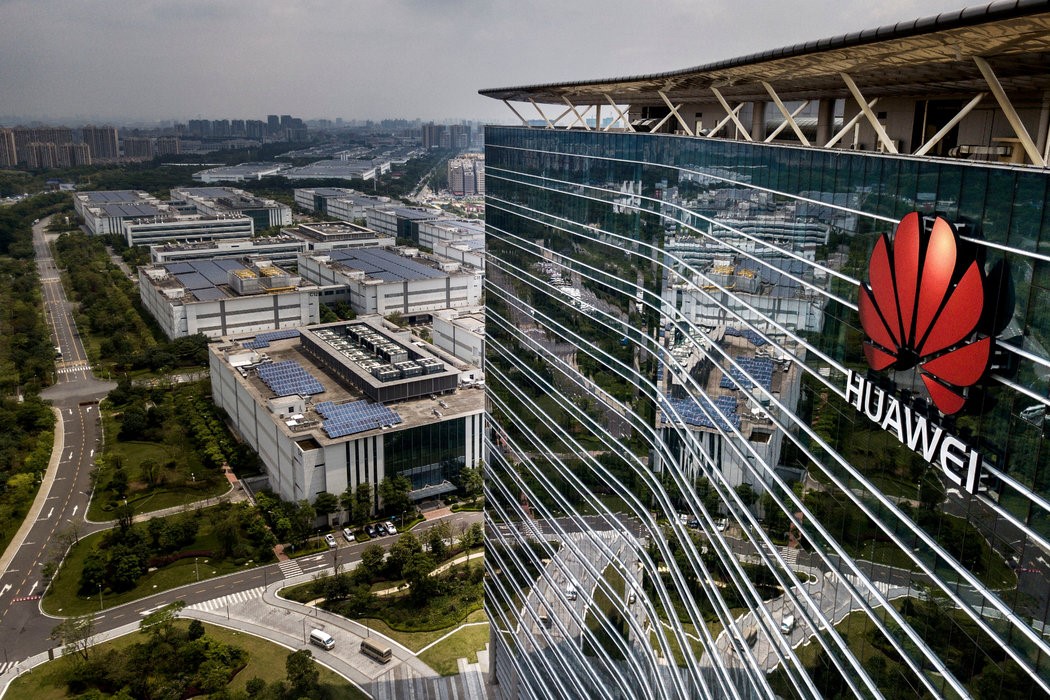
SANTA CLARA, Calif.—Despite an amended wafer supply agreement that gives Advanced Micro Devices Inc. (AMD) the right to use other foundries to make its 28-nm accelerated processing units (APUs), Globalfoundries Inc. expects AMD to increase its business with the firm in 2012.
AMD expects to spend about $1.5 billion on wafers processed by Globalfoundries in 2012, up from about $900 million in 2011, said Michael Noonen, senior vice president of sales, market and quality at Globalfoundries, in an interview at the Common Platform Alliance Technology Forum here Wednesday (March 14).
Earlier this month, AMD and Globalfoundries announced an amended wafer supply agreement by which Globalfoundries waived a requirement that AMD's 28-nm APUs be manufactured at Globalfoundries. In exchange, AMD will pay Globalfoundries a cash payment of $425 million and transferred its remaining stake in Globalfoundries back to Globalfoundries. AMD said it would take a $278 million charge associated with the equity stake transfer.
With AMD willing to pay $425 million and give up its remaining stake in Globalfoundries for the right to have its 28-nm APUs manufactured by other foundries, the news was widely interpreted as the beginning of the end of the relationship between AMD and its former manufacturing unit, which was spun out in 2009.
But in a conference call with analysts following the announcement last week, Thomas Siefert, AMD's chief financial officer, said that AMD plans to spend about $1.5 billion with Globalfoundries in 2012 and that the company will have 28-nm products manufactured at both Globalfoundries and rival Taiwan Semiconductor Manufacturing Co. (TSMC).
Seifert also painted a picture of an improving relationship with the two companies after it was strained by yield issues at 32-nm. "We are really happy with the progress both parties have been making and the trajectory with which we enter into this year on the technology nodes," Seifert said. "And I think the agreement is not less but also not more than putting really a mutually beneficial agreement in place that allows us to better balance risk moving forward but also gives Globalfoundries the ability to further diversify their customer base."
Noonen, who joined Globalfoundries in January after more than three years with NXP Semiconductors, noted that it was always a goal for Globalfoundries to separate itself completely from AMD, though he acknowledged that the structure of the deal may not have been the way it was originally envisioned.
Noonen said new management at both companies—the appointment of Ajit Manocha as CEO of Globalfoundries and Rory Read as CEO of AMD—set a new tone for a healthier relationship between the two companies after the difficulties last year, when poor 32-nm yields at Globalfoundries cut into AMD's sales. The amended wafer supply agreement and AMD's divestiture of its equity stake in Globalfoundries further improves the working relationship between the two, he said.
"I want to compete for their business as opposed to it being contractually obligated," Noonen said. "That's always a stressful situation." Noonen added that disentangling a spinout from its former parent company is always a difficult situation.
"Now with the business arrangements we have, it's a much healthier basis and one that allows us to highlight that we want to be the best supplier we can be to AMD," Noonen said.
Now No. 2 pure-play foundry
According to Noonen, Globalfoundries in the fourth quarter surpassed United Microelectronics Corp. (UMC) and is now the second-largest pure play foundry in the world, behind TSMC. "We anticipate that we won't look back on that and that we will sustain it in 2012," he said.
The claim to the No. 2 position in pure play foundry is a difficult one to verify, since Globalfoundries is a privately held company that doesn't report quarterly financials. For all of 2011, Globalfoundries was ranked as the No. 3 foundry by market research firm IC Insights Inc., with sales of $3.58 billion, trailing UMC's $3.76 billion and TSMC's $14.6 billion.
On the analyst conference call last week, Siefert said Globalfoundries' yield performance at 28-nm has improved significantly since the issue came to a head last summer. This, Seifert said, gave AMD the confidence to enter the amended supply agreement, which is structured as a fixed-price, "take or pay" agreement as opposed to the previous agreement, where AMD paid only for good die. "We both believe that yields have progressed to a degree and maturity that we can make this transition," Seifert said.
Noonen said Globalfoundries expects to have its 28-nm process in volume production later this year. The company has already processed about 40 customer test chips at 28-nm, he said. "Making that move to 28-nm wasn't nearly the same degree of difficulty and hurdle that going to 32-nm was," he said. "Going from 32- to 28-nm, there are a lot more process steps in common."